¶ PortaOne
- Overview
- Installation
- Basic configuration
- Customer account settings
- Voice processing configuration
- Splynx PortaOne Integration
¶ Overview
The PortaOne add-on is used to import customers' calls from the PortaOne software system into Splynx.
Individual calls and their prices (CDRs) can be shown in Splynx as Statistics within the customer profile and their Customer portal. These calls can also be included in a customer’s PDF invoices.
¶ Installation
The add-on can be installed via one of two methods: via CLI or the Web GUI.
To install the PortaOne add-on via CLI, the following commands should be used:
apt-get update
apt-get install splynx-portaone
To install the addon via the Web GUI:
-
Navigate to Config → Integrations → Add-ons.
-
Locate or search for the
splynx-portaoneadd-on and click on the install icon in the Actions column:
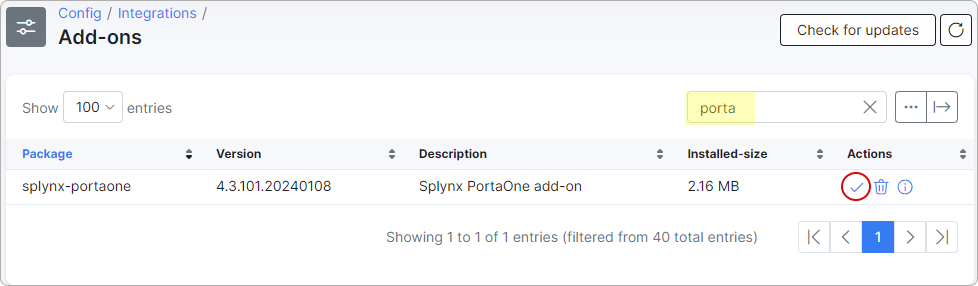
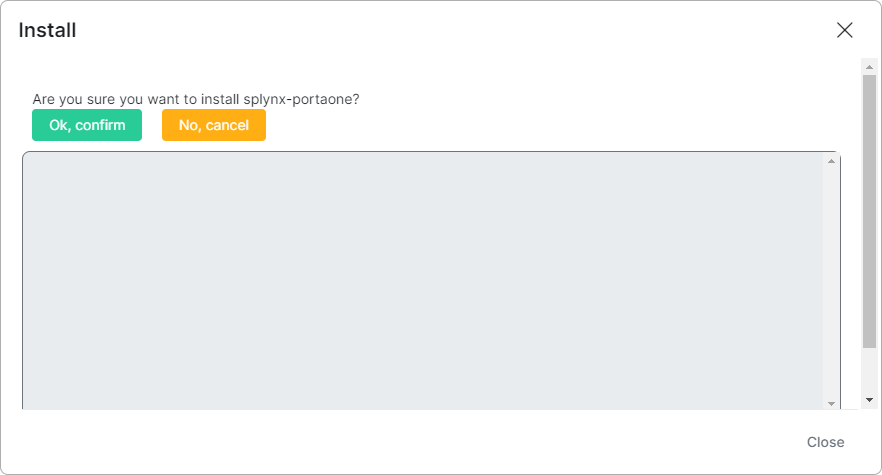
- Click on the
OK, confirmbutton to begin the installation process:
¶ Basic configuration
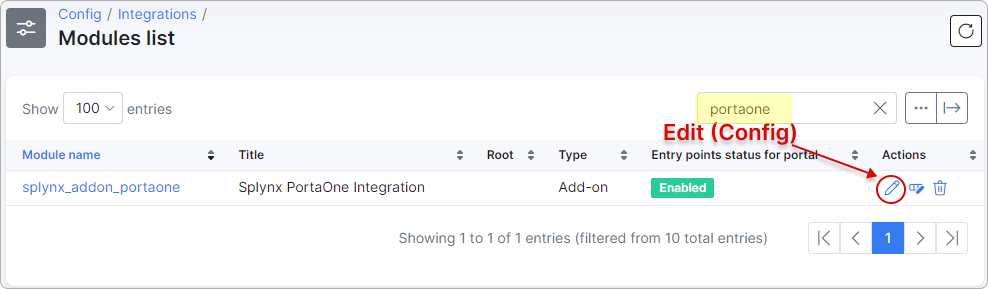
Navigate to Config → Integrations → Modules list and search for splynx_addon_portaone.
Then click the Edit (Config) button to perform the basic configuration:
¶ API settings
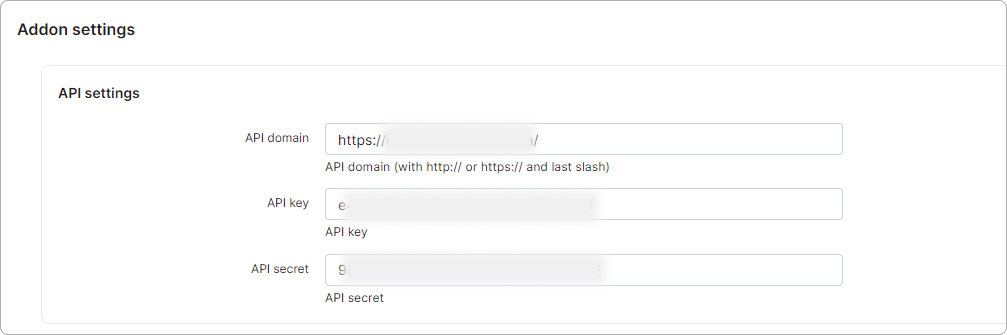
 The API domain, API key and API secret are already pre-populated by default after the add-on installation and don’t require any configuration.
¶ PortaOne API settings
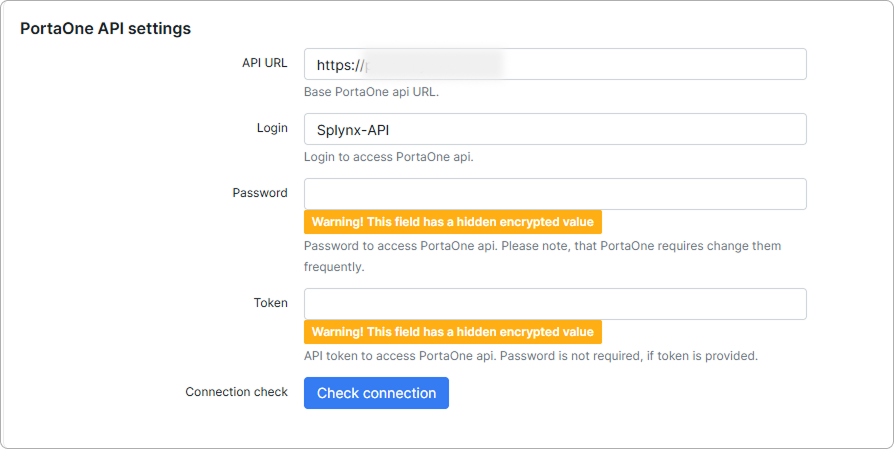
- API URL - PortaOne API URL;
- Login - your login to access the PortaOne API;
- Password - your password to access the PortaOne API;
PortaOne requires you to change the password regularly.
- Token - your token to access the PortaOne API.
 The password is not required if the token is provided.
The PortaOne software system:
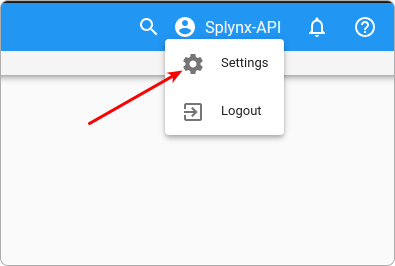
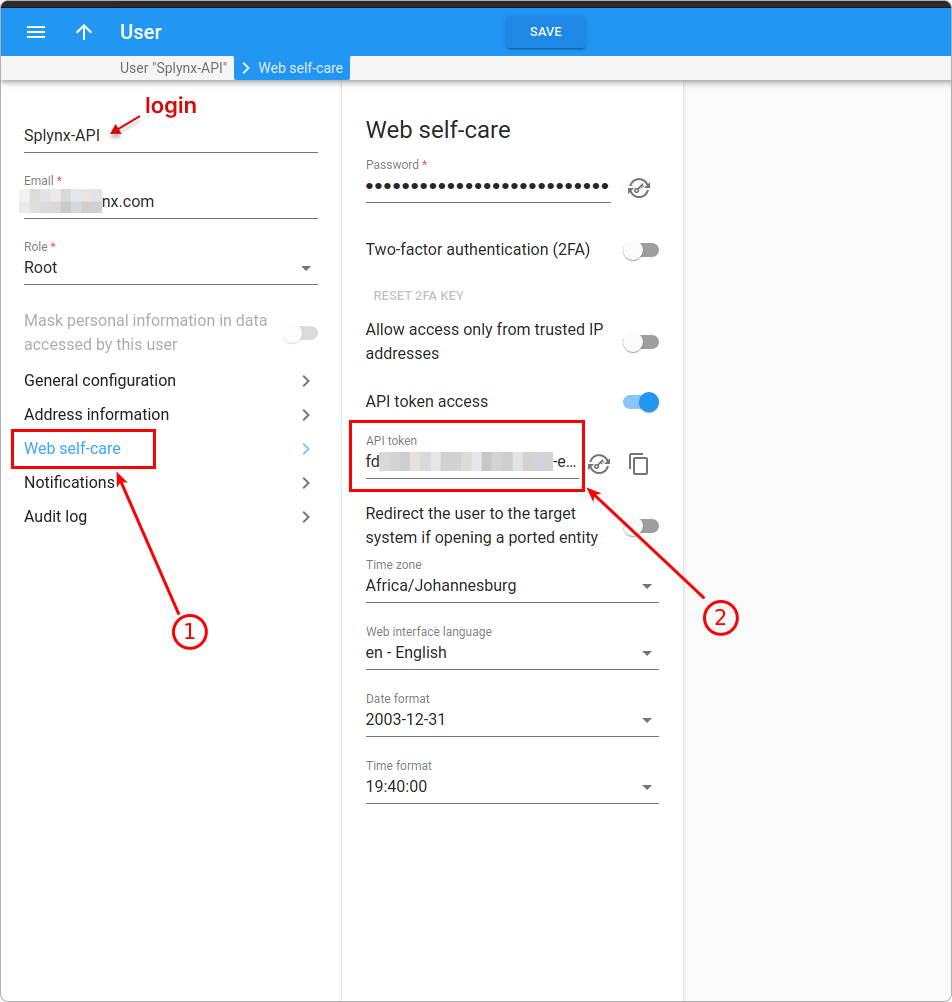
- Connection check - the
Check connectionbutton verifies that Splynx can log in to the PortaOne API with the credentials above.
Click Check connection to test the connection without running a synchronization. Splynx first checks that API URL, Login and either Password or Token are filled in, then performs a test login request to the PortaOne REST API:
- if the login succeeds, a success message confirms that the connection works;
- if it fails, an error message shows the reason — invalid credentials, an unreachable API URL, or a connection timeout.
The check uses the credentials saved in the configuration. Click Save first, then click Check connection — otherwise the check runs against the previously saved values.
¶ Synchronization settings
These settings control what the add-on imports from PortaOne and how often.
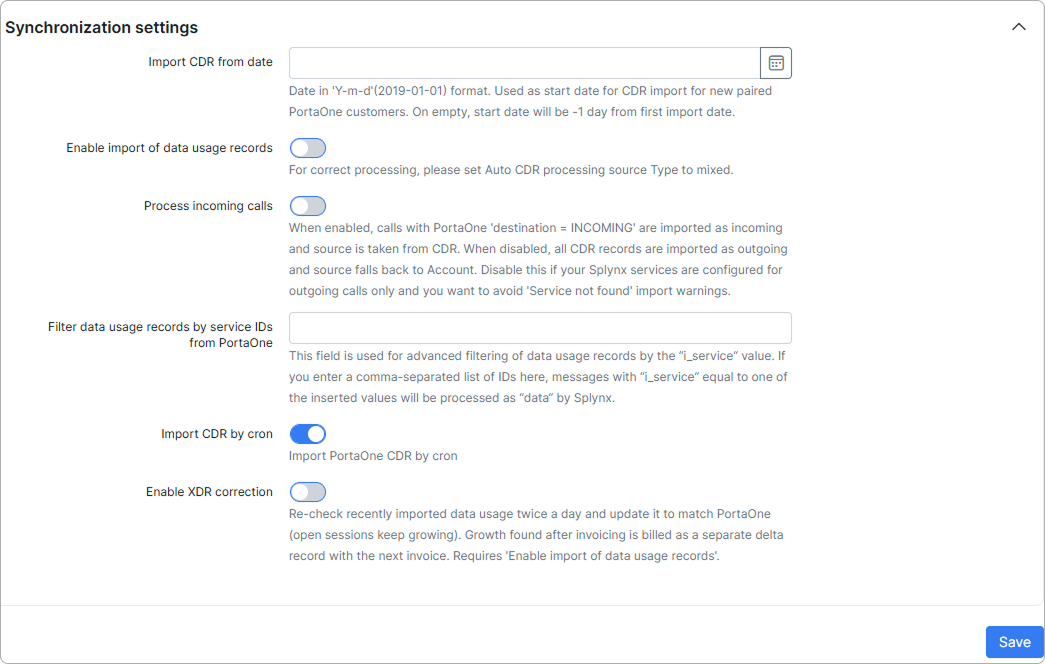
- Import CDR from date - the date (in 'yyyy-mm-dd' format) used as the start date for the CDR import for newly paired PortaOne customers. If left empty, the start date will be one day before the first import date;
- Enable import of data usage records - when enabled, Splynx also imports data usage records (for example, APN or network access sessions) from PortaOne, not only voice calls;
For data usage records to be processed correctly, set the Source type to Mixed in your Auto CDR processing entity — see Voice processing configuration.
- Process incoming calls - when enabled, records that PortaOne marks as
INCOMINGare imported as incoming calls, and the source number is taken from the record itself. When disabled, every record is imported as an outgoing call and the source number falls back to the customer's account number. Disable this option if your Splynx voice services are configured for outgoing calls only, to avoid Service not found warnings during import; - Filter data usage records by service IDs from PortaOne - an optional advanced filter that tells Splynx which PortaOne records are data usage, based on the PortaOne service ID (
i_service). Enter one ID or a comma-separated list of IDs; every imported record with a matching service ID is treated as data usage. If the field is left empty, Splynx decides by the uploaded and downloaded byte values in the record instead;
Filtering by service ID is the more precise option. Without it, rare PortaOne records that carry no byte values — merged records, for instance — can be imported as calls instead of data usage.
- Import CDR by cron - import PortaOne CDRs using cron. CDRs will be imported from PortaOne to Splynx daily at 01h00. If disabled, no CDRs will be imported from PortaOne;
- Enable XDR correction - re-checks recently imported data usage records twice a day and updates them to match the current values in PortaOne. PortaOne keeps updating a record for as long as the session stays open, so a record imported mid-session is incomplete. If the usage grows after the customer has already been invoiced, the difference is billed as a separate record with the next invoice. Requires Enable import of data usage records to be enabled.
¶ Customer account settings
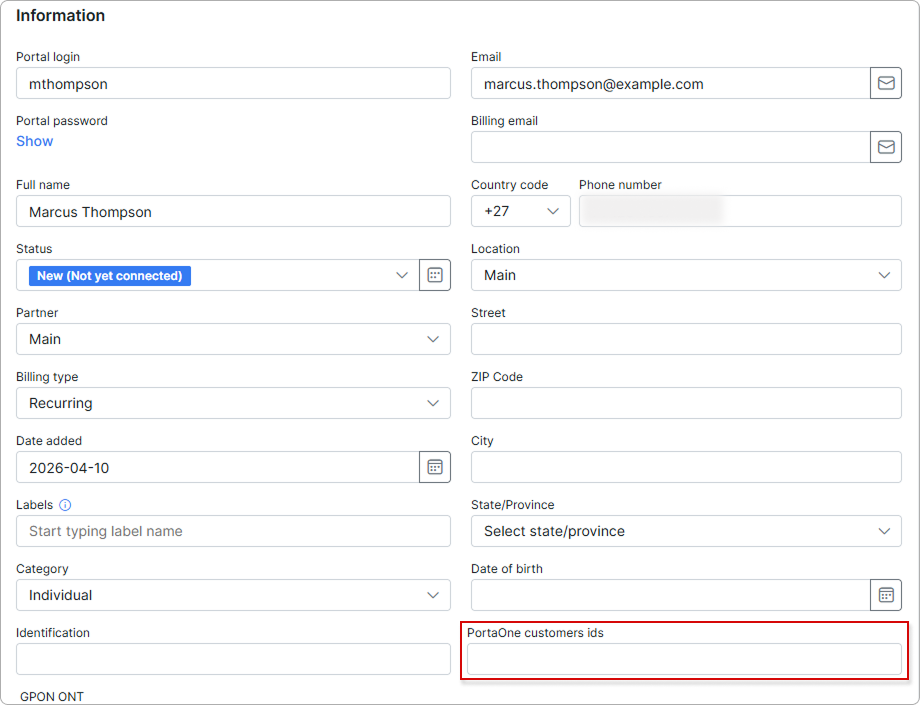
The PortaOne customers ids field will automatically appear after the add-on installation under the customer's Additional information.
When the basic configuration is done, add the PortaOne ID for each customer that should import calls:
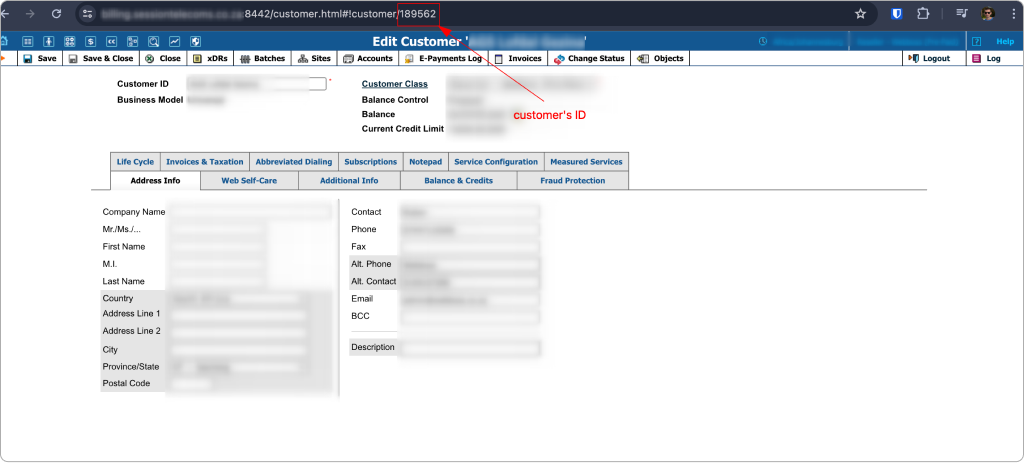
On PortaOne, you can retrieve the customer's ID:
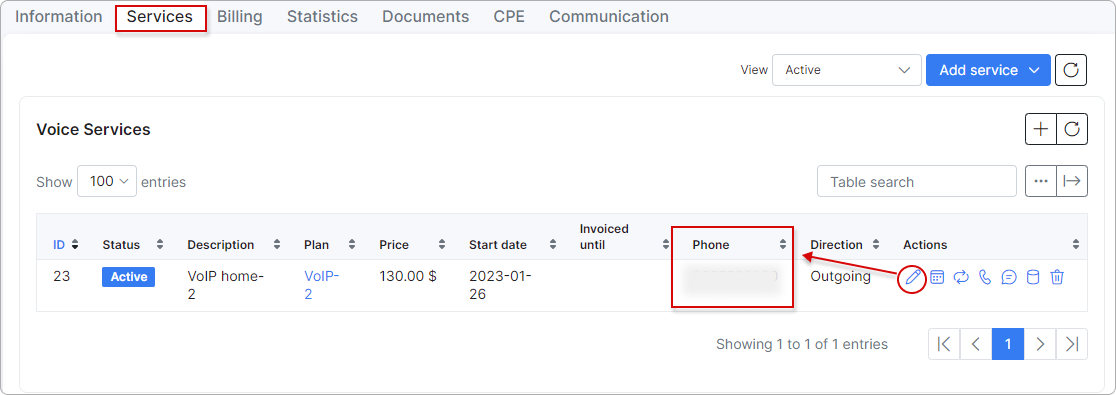
The customer’s phone number should also be set in the relevant voice service:
¶ Voice processing configuration
The next step is to configure the Auto CDR processing.
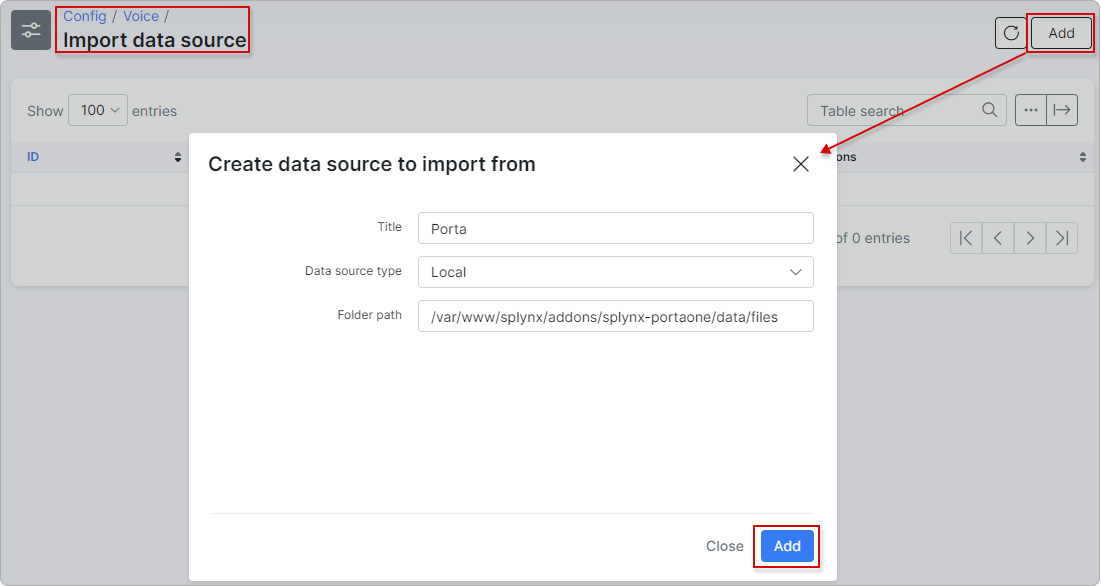
An import data source should be created in Config → Voice → Import data source
- Set a relevant name.
- Select “Local” as the Data source type.
- Use the following default path:
/var/www/splynx/addons/splynx-portaone/data/files
Then navigate to Config → Voice → Auto CDR processing and create an Auto CDR processing entity where we should define the data source to import from, as well as the PortaOne handler (auto-created by the addon):
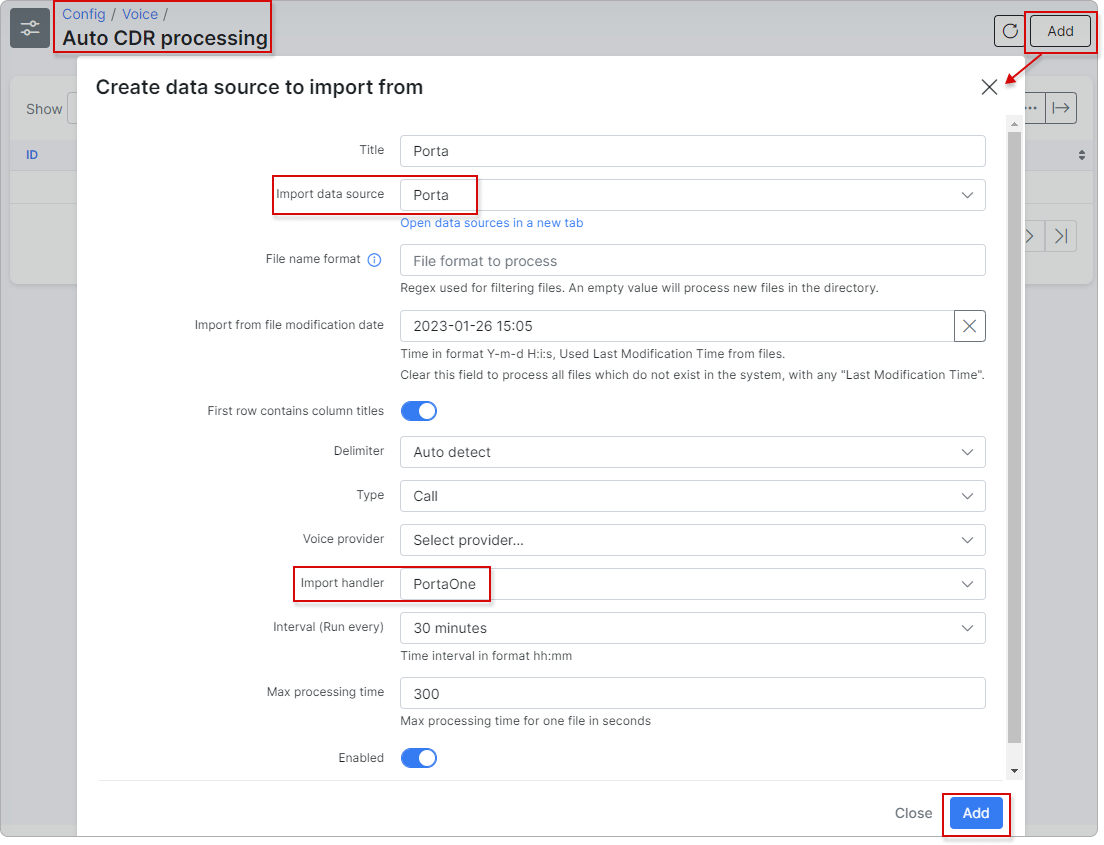
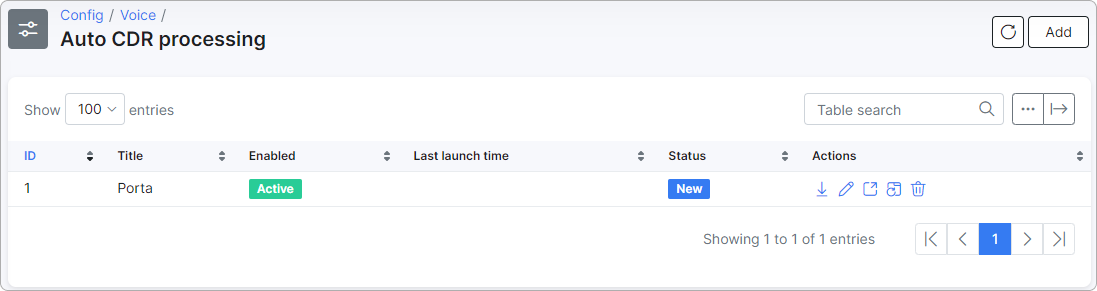
The system will now auto-process voice calls from the addon local folder using the defined interval.
¶ Splynx PortaOne Integration
Under Config → Integrations → Splynx PortaOne Integration, you can import CDRs and logs, as well as manually pair customers.

¶ CDRs import
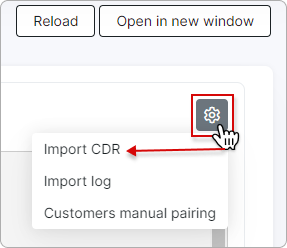
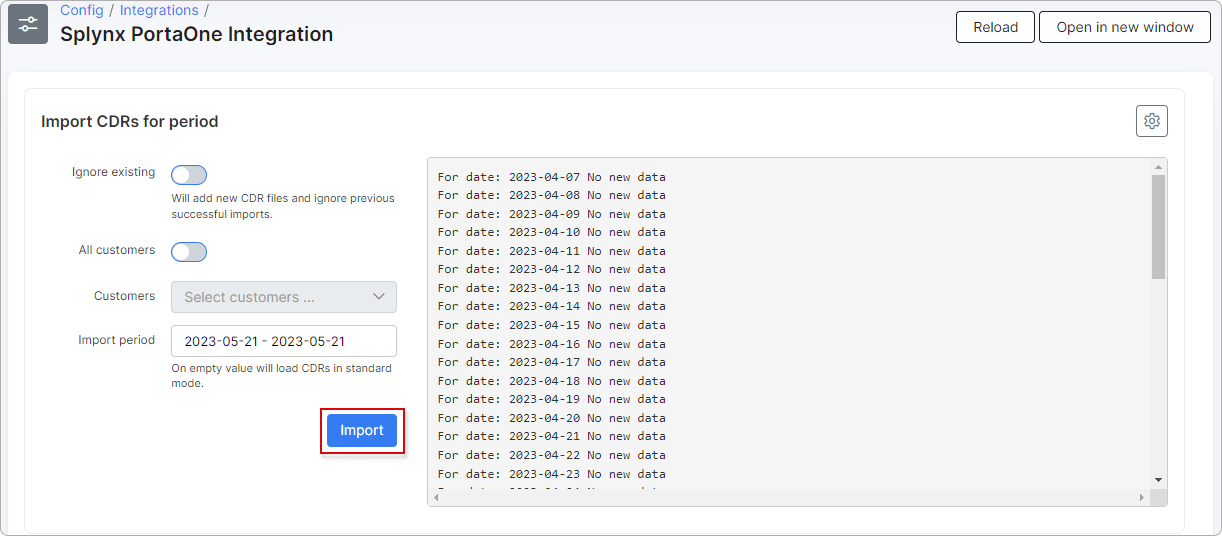
To import CDRs, click on the gear button at the top right corner of the page and choose Import CDR:
¶ Log import
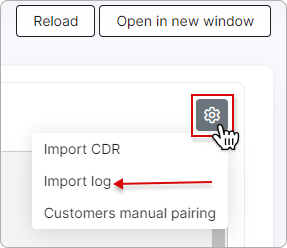
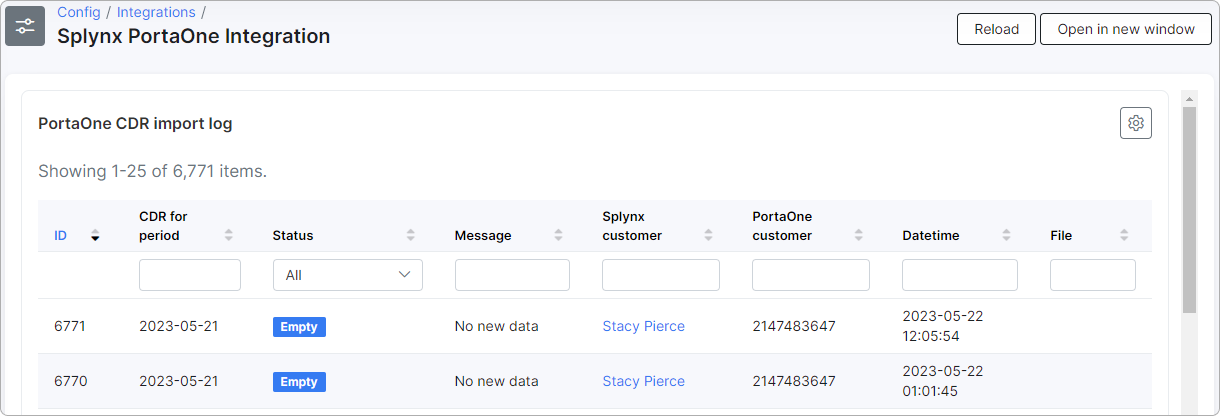
To import the log, click on the gear button at the top right corner of the page and choose Import log:
¶ Customers manual pairing
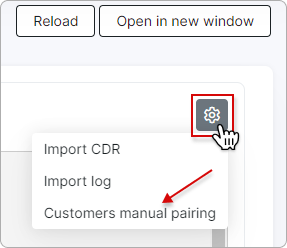
To perform the customers manual pairing, click on the gear button at the top right corner of the page and choose Customers manual pairing:
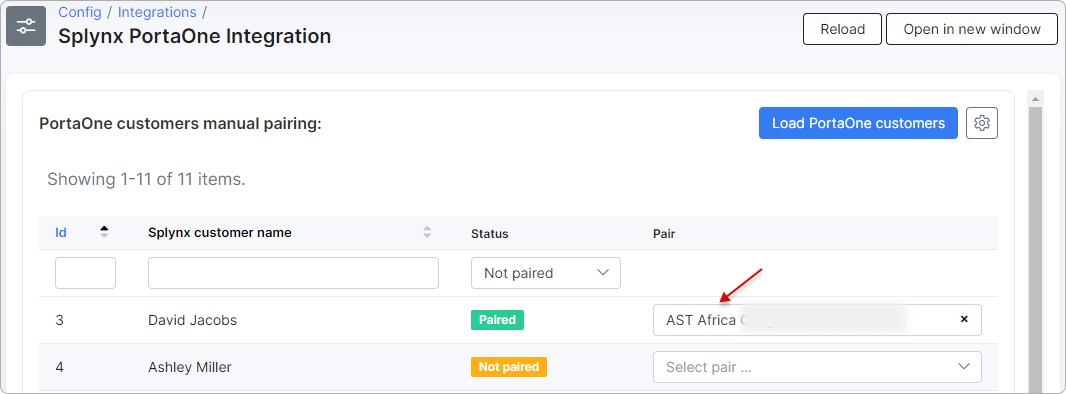
Then, select Pair next to the customer name. The status will change from Not paired to Paired, indicating a successful pairing: