¶ Sender matching
¶ Overview
On the Sender matching page (shown as Email sender matching), you can pair unknown email addresses with existing customers or leads in Splynx. To open it, navigate to Tickets → Sender matching.
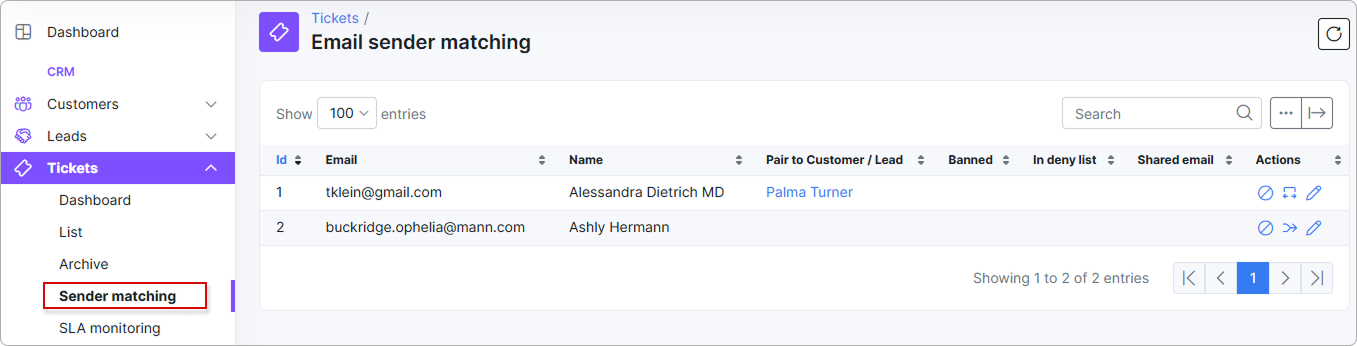
Pairing lets tickets received from unrecognized email addresses be assigned to the correct customer or lead, so ticket notifications are sent to the newly paired email addresses.
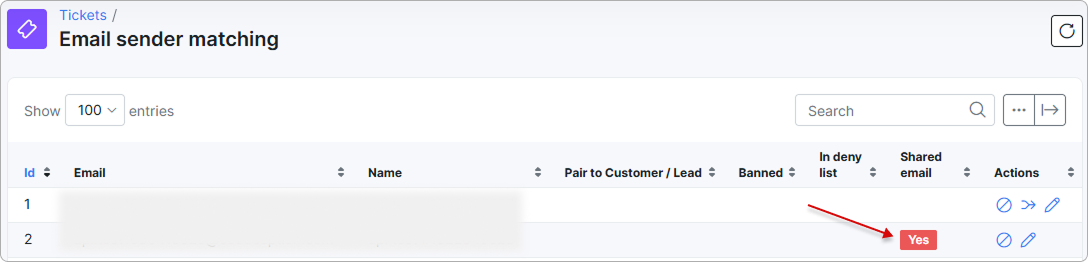
Each unknown sender is listed with the following columns: Id, Email, Name, Pair to Customer / Lead, Banned, In deny list, Shared email, and Actions. From the Actions column you can pair an email address to a customer or lead, unpair it, edit the sender name, disable pairing, ban a sender's email address, and check whether an email address is in the deny list.
To make the pairing feature work correctly, set up SMTP, Inboxes, and enable Ticket notifications.
¶ Action buttons
The following actions can be applied in the Unknown senders table:
Ban requester  - the sender's email address is banned from sending messages to the Incoming mailbox; the next new ticket from this email address is not created in Splynx.
Unban  - the sender's email address is unbanned and the next new ticket is created in Splynx.
Pair  - links an unknown email address to an existing customer or lead in Splynx; the created ticket is assigned to the paired customer or lead.
Unpair  - unlinks the paired email address from the existing customer or lead.
¶ Pairing
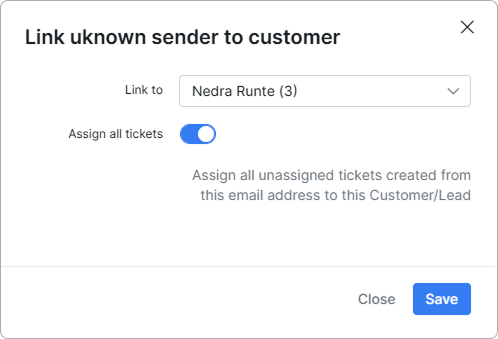
When you click the Pair icon, a window appears where you can link an unknown sender to a customer or lead by selecting the name in the Link to field.
The Assign all tickets toggle assigns all unassigned tickets created from an unknown email address to the selected customer or lead.
Edit sender  - edits the sender's name shown in Tickets.
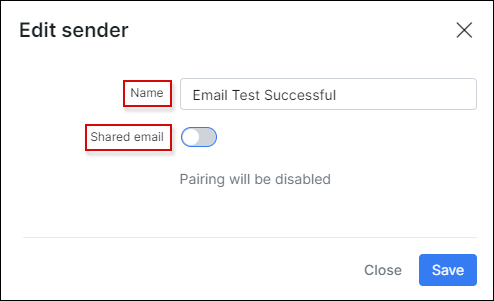

Shared email - this toggle marks an unknown email address as shared, which disables pairing for that address.
The  status in the In deny list column means the email address was added to the Deny list in Config → Helpdesk → Inboxes (see Inboxes). Tickets from this email address are not created in Splynx.
¶ Examples
Example #1: Notifications to customers' emails
Suppose you have set up SMTP, an Incoming mailbox (support@support.com), and enabled Ticket notifications. In the SMTP config, you use admin@support.com in both the Sender's email and Admin email fields. A customer sends a message to support@support.com from a new email address, so a new ticket is created in Splynx. You then pair the new email address with your customer in Tickets → Sender matching.
A New ticket created notification is sent to admin@support.com. When the administrator replies directly to that notification, the New ticket created (Request received) and New message in ticket notifications are sent to the customer's paired email address. Only New message in ticket is sent to the customer's mailbox (the Email field in the customer profile). No notifications are sent to the customer's Billing email.
Example #2: The relationship of the customer's message to the ticket
You pair two email addresses to one customer in Tickets → Sender matching: address1@xxx.com and address2@xxx.com. The customer writes a message from address1@xxx.com to your Incoming mailbox (support@support.com), and a new ticket is created in Splynx. If the customer replies from address2@xxx.com to a ticket notification (for example, New message in ticket), the message is added to the existing ticket's thread — created from address1@xxx.com — in Splynx. The message subject must not change; otherwise a new ticket is created.
Example #3: Viewing a ticket as an administrator with a specific partner
A new customer or lead writes a message to the Incoming mailbox, so a new ticket is created in Splynx and their email address is added to the Tickets → Sender matching list. If you have an administrator assigned to a specific partner (for example, Main), that administrator cannot view the created ticket. Only an administrator with the Partner parameter set to Any, or with the Super administrator role, can view such a ticket. In addition, the new ticket cannot be assigned to an administrator with a specific Partner parameter.
¶ Table management and export
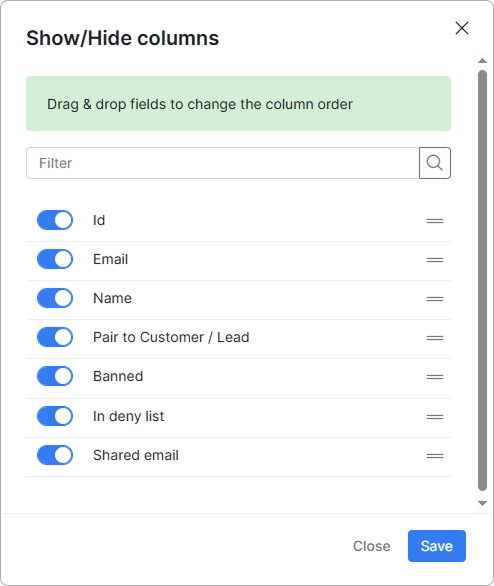
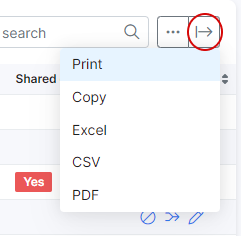
The Unknown senders table can be modified to display the necessary fields with the  icon at the bottom of the table, or the data can be exported in a format of your choice with the export
  icon.
icon.